29 November 2012

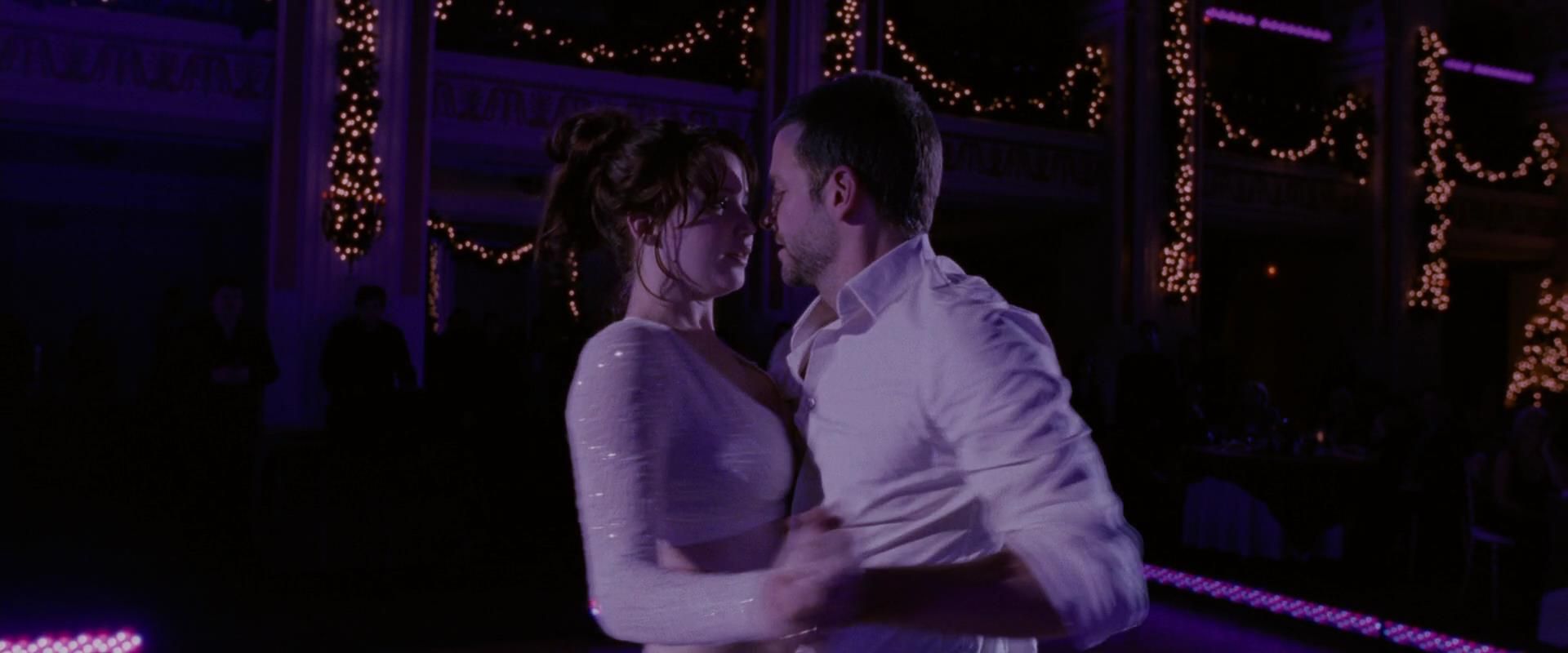
Silver Linings Playbook (David O. Russell, 2012)

7.5/10
SLP didn't look particularly great from the thousands of trailers and ads that were crammed down my throat for seemingly the past month or two. The cynic in me has a knee-jerk reaction to those movies Hollywood loves featuring beautiful people whose illnesses are only just so to make them quirky and endearing, as opposed to ugly and offensive. But all things considered, it's a good movie, and it connects emotionally thanks in no small part to Cooper and Lawrence, who are both on the top of their game (although I didn't think Cooper was that amazing. Ahead of Phoenix? No thanks). Robert De Niro was also excellent - no matter how much crap he's been in the last decade, his performance is a reminder of just how good he is.
I found the movie took a turn for the worse right around the "Eagles game" scene (I won't say more for spoilers) - at that point the events lost a bit of their naturalism and started to feel more scripted, with a last-minute plot point shoehorned in to create a false sense of drama. Comparing this to David O. Russell's previous The Fighter, I don't get the sense that he has fully mastered subtlety, but it's a big improvement.
One visual complaint - what the hell was with the sometimes-swoopy camera? Just because you can doesn't mean you should.

Three Colors: Red (Krzysztof Kieslowski, 1994)

8.5/10
Definitely my favorite entry, I think it hits really well on all three aforementioned areas - visually great, excellent acting (Trintignant is superb) and an unexpected but perfectly fitting ending. Maybe Irene Jacob is my least favorite of the three actresses in the trilogy, but she still did a better job than I expected from her precipitous first scenes. She comes into her own during the movie quite well, but has her work cut out for herself opposite Trintignant. A great trilogy with a forgiveably lesser middle link. Blue and Red more than pick up the slack, in any case.

Three Colors: White (Krzysztof Kieslowski, 1994)

7/10
Historically thought to be the weakest of the three, and I agree. It's a nice, very clever movie, but it didn't engage me the way the other two did. The lead actor (too lazy to google his name, Zbigniew something or other?) was great though, and the movie is darkly funny much of the time. Julie Delpy is good, but unfortunately absent for much of the movie...albeit by necessity. Visually this was the least appealing for me, but that ending is pretty remarkable.

Three Colors: Blue (Krzysztof Kieslowski, 1993)

8/10
Juliette Binoche is always watchable, so that's a big strength. In my opinion, the most visually stunning of the three - I think the image of Binoche standing in front of that blue light/chandelier thing will be burned in my mind forever. Really liked the sudden cutting in of the string sounds...I thought that was a smart way to mirror the sudden pangs of grief. I have to say, though I liked much of the movie, I wasn't crazy about the ending; probably my least favorite ending of the three in fact.

22 November 2012

Skyfall (Sam Mendes, 2012)

8/10
Action movies that aren't strong in their middle acts are a rare breed indeed, and it's Skyfall's strength to a fault. It takes a little too much time doing little in the first act, and trots out the woefully overused reluctant hero trope which, after The Amazing Spider-Man, The Avengers, and The Dark Knight Rises, needs to be murdered immediately. The title credits and opening sequence are exhilerating, but after that, some patience is tried - despite the impressively filmed Shanghai fight scene
. But the heart of the movie is when Javier Bardem shows up as Silva, in an incredible role that rivals even his Anton Chigurh in all-around creepiness and psychosis. Amazingly, the most bracing sequence in the film is not any fight or chase scene, but the first conversation between Bond and Silva.
The final act is good, but not great - while I appreciated the "personal" level the movie aims at (Silva going after M for revenge, rather than the head of some evil corporation trying to get megarich or what have you), it necessarily resulted in a somewhat underwhelming ending.
But overall, the movie does a lot of things really well, and several things exceptionally so. The much-lauded photography by Roger Deakins was good, but considering the hype, I was expecting to be a little more blown away. Same could be said for the movie as a whole, maybe.

21 November 2012

Dr. No (Terence Young, 1962)

6/10
My Bond knowledge is non-existent. I saw Quantum of Solace when it came out and that was my first one. Just not a series that has ever interested me. But my brother got a hold of a bunch of burns of the first 10 or so, so I decided to join in on the viewing. Dr. No is, of course, the first one, and it seems like a pretty tentative start. Nothing overly sexy or dangerous or exciting here, in fact it's got a couple of pretty cheesy moments, even for the 60's. In any event, I hear Dr. No isn't even very highly regarded by Bond enthusiasts. But it's kind of cool to see the origins of the whole thing. I'm definitely more looking forward to the next two, From Russia with Love and Goldfinger. Well, and Skyfall, which I'll be seeing tonight...but that's getting ahead.

Letter Never Sent (Mikhail Kalatozov, 1959)

8/10
What a coincidence - I had watched this a couple of days ago and I come in here to find it a topic of discussion. The camera work and cinematography is indeed the highlight of this movie (I've yet to see Cranes, so no comparisons). In fact, it's been suggested that the plot is just a loose excuse to get the central quartet to Siberia (or somewhere suggestive of Siberia) and film them in all manner of beautiful landscape. But it's never boring, and definitely worth a look, especially if your tastes trend toward the more visual side of things. I grabbed it during a 50% off sale as a total blind buy and I'm not disappointed, but it's not often you get disappointed by Criterion either.