7.5/10
This is a hard movie to critique, I feel like it very much 'is what it is'. Which was fun, generally speaking. I'd heard some complaints about the length but it never felt long to me.
DiCaprio was good. Best Actor worthy? A nomination, sure, but I don't think he should win the big prize. A lot of scenes were simply played to excess (obviously) that I felt a lot of actors could have done. However, just when I thought DiCaprio wasn't bringing a whole lot that was unique to the role, he gave the "Steve Madden speech" which served as reminder to anyone who forgot just how good he can be when he has to. I also thought the infamous quaaludes scene showed a dimension of physical comedy that I wouldn't have expected from him. Jonah Hill is also very good, also deserving of his nomination.
As for the movie itself, I guess what was slightly frustrating was its refusal to take any kind of moral stance. I guess it's more fun to show Jordan Belfort in all his excesses and let him off the hook by passing as little judgement as possible. I did enjoy the ending, however - the scene of the detective on the subway was suitably understated, and the closing shot of the sea of people waiting to be molded into the next Jordan Belfort is appropriately terrifying. The Wolf of Wall Street is as much (maybe more) a celebration of the culture that creates Jordan Belforts as it is a condemnation of it, but I find this to be a bit like wanting to have your cake and eat it too. I wish Scorsese had maybe tried to say a little bit more with his movie, but I still enjoyed myself regardless.
21 January 2014
The Wolf of Wall Street (Martin Scorsese, 2013)
15 January 2014
Inside Llewyn Davis (Joel Coen & Ethan Coen, 2013)
8.5/10
I've seen a good number of movies this year from all over the place, and Inside Llewyn Davis, for me, was one of the most challenging. Or difficult. Or impenetrable. Or maybe it means nothing more than what's on screen and I'm reading more into it than what is actually there. The Coens have a history of inserting weird, magical, semi-symbolic scenes in their movies that seem out of place in worlds that are otherwise starkly rooted in reality (off the top of my head, the dybbuk opening scene and the closing tornado in A Serious Man, the bowling dream sequence in The Big Lebowski, the fiery hotel in Barton Fink, the repeated shots of ceiling fans in Blood Simple). Inside Llewyn Davis felt like one of those scenes, stretched out to a 1h45m running time. The car trip in particular was one of the most disorienting and surreal sequences I've seen in a movie that I thought was supposed to be "normal". Of course, there is a relatively "normal" storyline but much in the same way I'm certain A Serious Man is about a lot more than a Jewish guy in Minnesota, I'm certain Inside Llewyn Davis is about a lot more than a folk singer in New York. Don't ask me to explain what more it's about, I'm just the cat in the car along for the ride.
07 January 2014
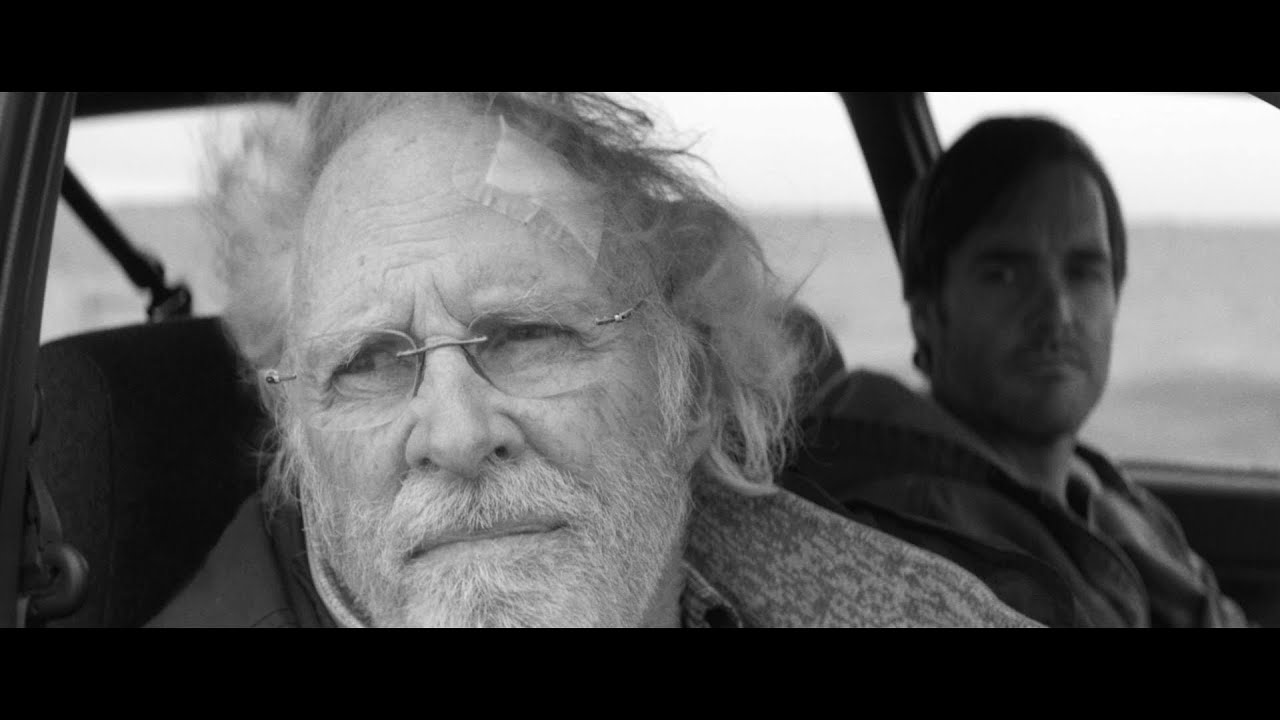
Nebraska (Alexander Payne, 2013)
9/10
I've been relatively lukewarm on Alexander Payne's movies (at least the last 3 he did, the only ones I've seen) but I felt like The Descendants was a marked step up, and now Nebraska is the best thing he's done by far. His previous movies were all sort of tinging humor with heartbreak but he never nails the mood better than he does here. It's equally hilarious and tragic, thanks in no small part to Bruce Dern, who is absolutely sensational in a terribly moving character. The movie is simple, well-written and quietly devastating. Maybe it lays its cards out a little too plainly and doesn't offer a whole lot in the way of surprises or mystery, but it doesn't really need to either. It's straightforward, honest, resonates emotionally, and contains way fewer cliches than I've used here. Very highly recommended.
28 December 2013
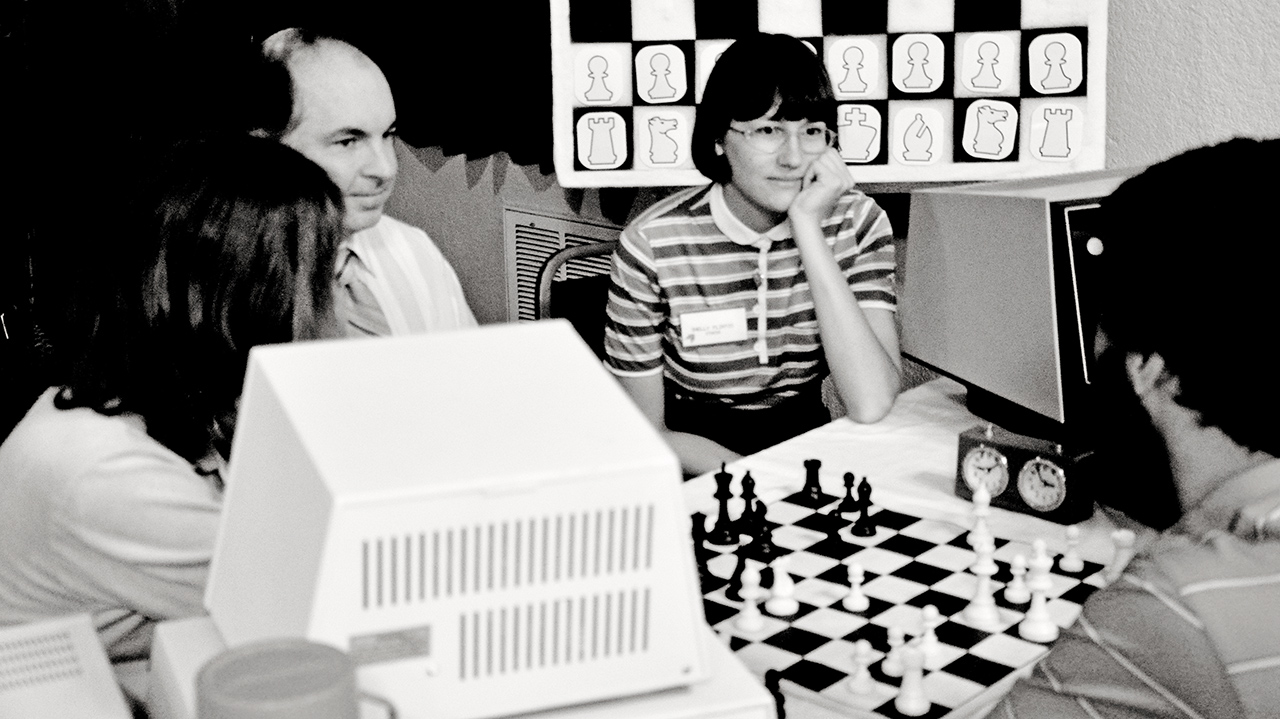
Computer Chess (Andrew Bujalski, 2013)
5/10
This was a movie I wanted to like a lot more than I actually did, or maybe one that I thought I would like more than I did. Shot in documentary style with a black-and-white camera and taking place over a weekend of a computer chess tournament at a hotel in the early 80's, it has an appealing retro feel. The story drifts around, spending time with participants in the tournament and other funny/bizarre going-ons at the hotel, but never commits to anything conceptually. It's billed as something of a comedy, but it wasn't particularly funny. A few strands are interesting or humorous, but nothing to write home about. This was a movie that did very well at the Sundance festival earlier this year, and my reaction to it is the same as my reaction to a lot of Sundance-approved films...it's nice and quirky enough for Mom & Pop to think it's different and exotic, but safe enough to risk offending no one. I personally thought it could have done and been a lot more.
As I Lay Dying (James Franco, 2013)
7.5/10
This is James Franco's second directorial effort after his 2011 student film The Broken Tower, and is an adaptation of William Faulkner's novel of the same name. The novel is noteworthy for its stream-of-consciousness style and its unconventional storytelling methods (15 different points of view recount the story). Franco makes some stabs at attempting to recreate those techniques on-screen, such as relying heavily on a split-screen approach and having characters give monologues directly into the camera. I found that generally these techniques worked and weren't distracting, though I could see how one might call them self-conscious and gimmicky. The movie is good, well-acted by all and extremely faithful to the book, and I don't think it would be inaccurate to suggest a lot of the movie's success is derived from Faulkner's words. It's no great shakes but it's a competent, enjoyable adaptation and I look forward to Franco's next book-to-screen translation, Cormac McCarthy's Child of God.
27 December 2013
American Hustle (David O. Russell, 2013)
4/10
Being annoyed by a David O. Russell film is becoming something of a masochistic year-end tradition, but I've never been bored by one, until now. American Hustle spreads roughly thirty minutes of entertainment over a painful near-2.5 hours, taking forever to reach a conclusion that's mildly interesting instead of being jaw-droppingly clever. It's representative of the movie as a whole, however - this is a movie that should be so vibrant the screen it plays on should be shaking. The characters should be more interesting, the jokes should be funnier, the soundtrack should dazzle, the con in the plot should thrill...none of these things happen. This feels like Russell doing his best Tarantino impression and failing miserably. What results is indeed a mildly interesting, occasionally entertaining, mostly boring, sloppily-scripted mess.
As far as the much-hyped cast goes, it's hit and miss. Christian Bale and Amy Adams fare best, which is good because they're the center of the movie. Bradley Cooper is all over the place, trying anything in vain to make his character into something. Jeremy Renner either sleepwalks through his role or simply isn't capable of bringing anything more. But Jennifer Lawrence is the true travesty, stuck with an awful, obnoxious character and resorting to painful histrionics to try and make it work. She deserved better, instead of having to lower herself to the gimmickry seen here.
For a movie that lasts as long as this one does, and with so much screen talent, to be only somewhat entertaining in spurts, is simply not good enough.
19 December 2013
Moebius (Kim Ki-duk, 2013)
6.5/10
I've never seen a Kim Ki-duk movie, but as I understand it he's South Korea's master provocateur. His early films like The Isle and Bad Guy drew heavy criticism for their perceived misogyny and squirm-inducing violence, often perpetrated on women. It seems he had quieted down in recent years but roared back this year with Moebius, which was banned in South Korea almost immediately (a decision since overturned).
It starts off with quite a bang - a woman discovers her husband's cheating ways. Entering his bedroom with a knife she attempts to castrate him. He fends her off and she, still seething with rage, enters their son's bedroom, castrates him instead and devours the member. The film them follows the son's attempt to have "normal" relationships (proving disastrous for others) and the father's survivor guilt (which manifests itself in curious ways). And the mother's inevitable return.
It is a strange movie, not just for the plot but also for the fact that the 90-minute movie is completely dialogue free. Not a silent movie, just no one talks. There is the obvious reading into silence in the context of abuse, or of abuse victims (and observers), and it's easy to see this as a condemning of South Korean society at large. The title also seems to be a clear reference, not just to the mirrored beginning and ending of the movie (without spoiling anything) but also the cyclical nature of abuse that is without beginning or end.
The movie has a little more to say (no pun intended) about sexual politics, guilt, and abuse than I detailed here, though it's not a grand statement and it's hard to believe Ki-duk isn't mostly just intentionally living up to his provocateur status with the shocking imagery in the movie. The film is even blackly comic at times - a scene involving a (different) castrated member winding up in the middle of a busy street and its owner looking on helplessly weirdly recalls Mrs. Doubtfire doing the same when Robin Williams knocks his mask off a window ledge.
I wouldn't call Moebius a particularly brilliant movie, and it's technically pretty unpolished, but at the very least it's certainly an original and interesting experience