1/10
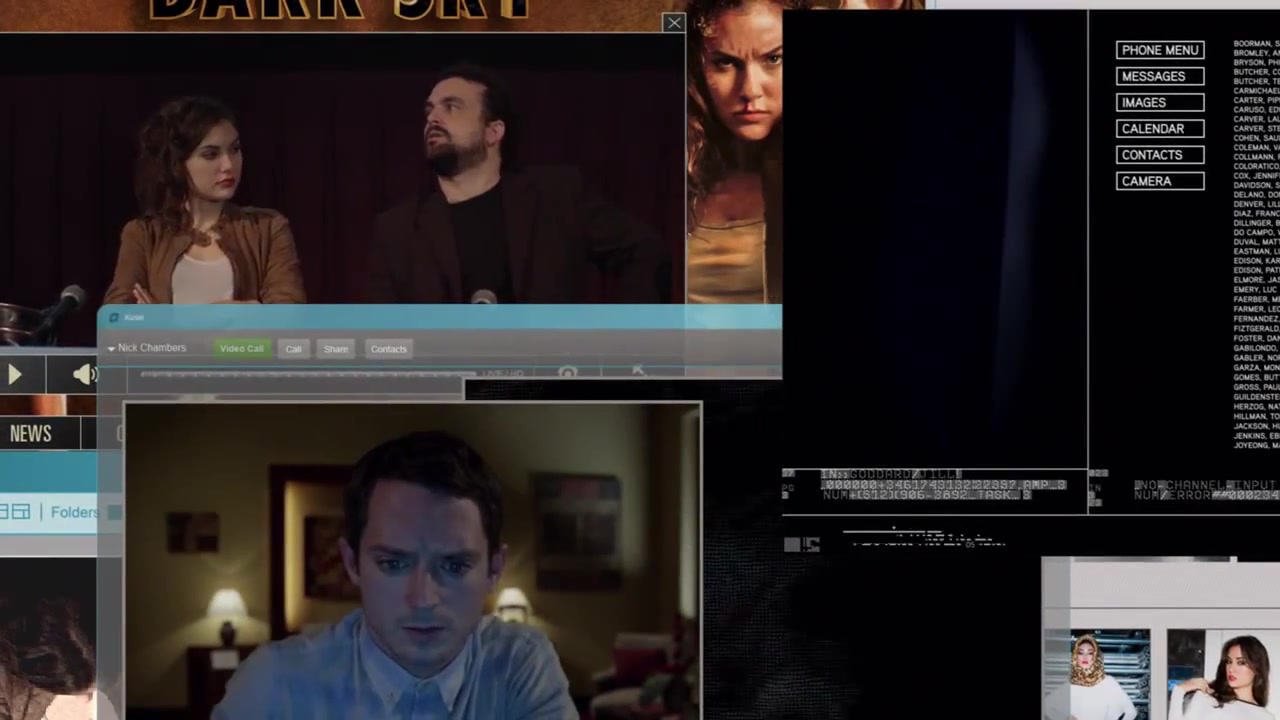
I was drawn to Open Windows because of its interesting premise - the whole movie takes place on a computer screen, with open webcam windows, videos, chats, etc. showing us the action we need to see to move the plot along. It stars Elijah Wood and Sasha Grey (still desperately seeking some kind of vehicle for her limited acting talents) so how bad could it be?
The initial plotting was intriguing - Wood is a geek obsessed with Grey's actress character. When she stands him up at a contest he won to have dinner with her, a mysterious third party hacks into his computer and grants him access to Grey's phone and effectively turns it into a camera, trying to play on Wood's feelings of betrayal after being stood up for this unknown party's equally mysterious end-game. Even this minimal plotting is rife with ideas - besides the betrayal and want for revenge the movie could have easily dealt with society's increasing voyeuristic tendencies, our ultra-connected worlds, our perpetually-shrinking privacy, the separation of our "real lives" from the internet, etc. Instead, writer/director Nacho Vigalondo dodges all those for bombs, explosions, car chases, ludicrous coincidences, enormous leaps in logic (and technology) and at times painfully old-school ideas about the internet and "hacking" that would have been cringe-worthy in a CSI episode from 2001, let alone in a 2014 movie that should be as tech-savvy as it presents itself.
Maybe I'm not being fair in holding Vigalondo responsible for not making a movie that conformed to my expectations of what his movie should have been about, but the movie he did end up making was so atrociously bad that it only magnifies what a missed opportunity this was. Judging from the numerous guffaws and groans of disbelief in the audience, I wasn't alone in this sentiment.
Also it's probably worth mentioning the theatre's speakers malfunctioned several times during the film, leading to explosive noises at a decibel level unheard of even at most rock concerts and two stoppages during the film to turn the lights on and get things under control. So that put everyone on edge and probably only served to stack the deck further against the movie. But it was a lost cause anyway if you ask me.
28 July 2014
Open Windows (Nacho Vigalondo, 2014)
Animosity (Brendan Steere, 2013)
6/10
This is an ultra low budget U.S. indie horror with a plot that I can't talk much about because it spoils most of the fun in seeing the movie. The film falls into the usual low budget pitfalls - the acting is spotty, the special effects are weak, and the camera work leaves a lot to be desired. It also, for some reason, has an instantly forgettable, anonymous kind of title that won't do it any favors. But there's a really good, interesting idea at the heart of Animosity. I won't say its failure to execute that idea was 100% owing to its budgetary constraints, because it could have done with some tighter editing or scripting. But it was something different, at least.
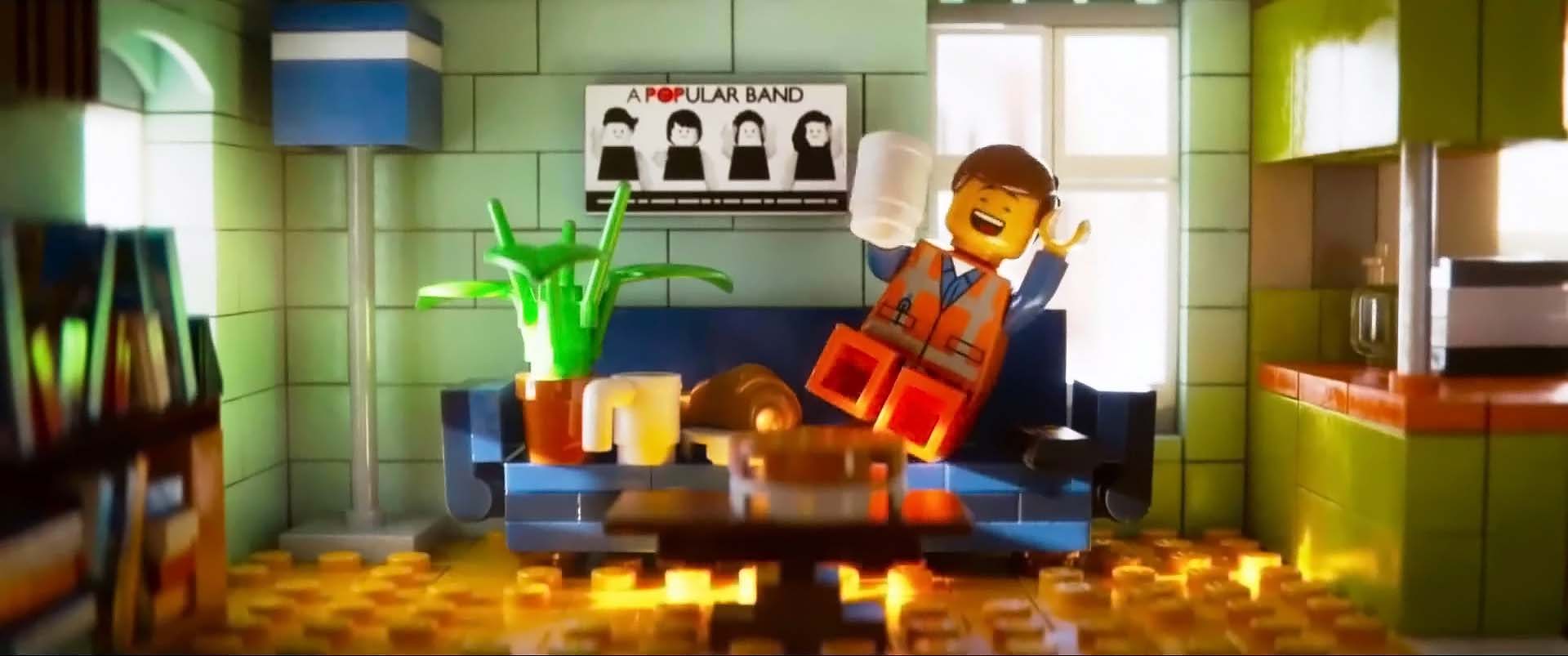
The Lego Movie (Phil Lord & Christopher Miller, 2014)
8.5/10
It was, of course, very funny and very clever. Maybe not up there with Pixar's top shelf efforts (it lacked the emotional punch for me) but a notch below which is not a bad place to be at all. Much better than it had any right to be, certainly, in the face of a zillion "they're making a Lego movie?" reactions.
06 June 2014
The Immigrant (James Gray, 2013)
5/10
The Immigrant is a movie that hits the ground walking, and breezes by without ever really registering anything in the viewer. Its story is steeped in melodrama, not helped at all by the cinematography (the entire film is shot in a kind of gold/brown hue that I guess is supposed to evoke the 1920's by force) or its syrupy, string-heavy soundtrack that runs almost continuously throughout the film. Writer/director James Gray allegedly based most of the movie on the stories his grandparents (or great-grandparents?) told him of their arrival in New York, but it still feels heavily constructed and artificial.
The movie's biggest downfall to me is the main character Ewa, portrayed by Marion Cotillard. For most of the film she's barely more than a blank slate, and we are rarely given insight into what she really thinks or feels. I guess this was intentional and in concert with the movie's anonymous, non-descript title ("the immigrant") but I don't think it did the story many favors.
Despite boasting two heavyweight actors (Cotillard and Joaquin Phoenix), I couldn't really say the acting was a strength either. Both do their best to breathe some life into characters that don't have a lot of depth, but it just feels like they're overcompensating for the fact that there's not much to work with.
I also feel bad for Cotillard in a way, whose agent seems to be swinging wildly in an attempt to find a post-La Vie en Rose vehicle for her but is coming up with a lot of should-have-been-better duds (Public Enemies, Nine, Rust & Bone, The Immigrant).
20 May 2014
The Saragossa Manuscript (Wojciech Has, 1965)
8/10
Wojciech Has directed two notoriously bonkers movies that have been on my list to see for a long time - this one and The Hourglass Sanatorium. A local theatre was showing the former on the weekend so I checked it out. Released in 1965, it's certainly a strange beast. It takes place during the Napoleonic Wars and sees a Polish officer finding the manuscript, and a Spanish officer helping him translate it, only to realize the book is telling the story of the Spanish officer's grandfather. The grandfather's story is the subject of the film, and the tribulations he goes through over the 3 hour running time are too much to get into here, but they are certainly...bizarre. Has (adapting the novel of the same time) often nests a story within a story within a story within a story to the point where it's tough to remember who's relating what and to whom. It doesn't add up to a great deal in the end, and I think Has is more having fun with what most of the tales are centered around - evil spirits and how the affect the lives of men. Indeed, the movie is pretty funny at times, and never takes itself too seriously.
The surrealistic "feel" is similar to some of Alejandro Jodorowsky's movies, although the overall tone is not nearly as silly or scatological. I do wonder if he saw it prior to making his Fando y Lis in 1968, however.
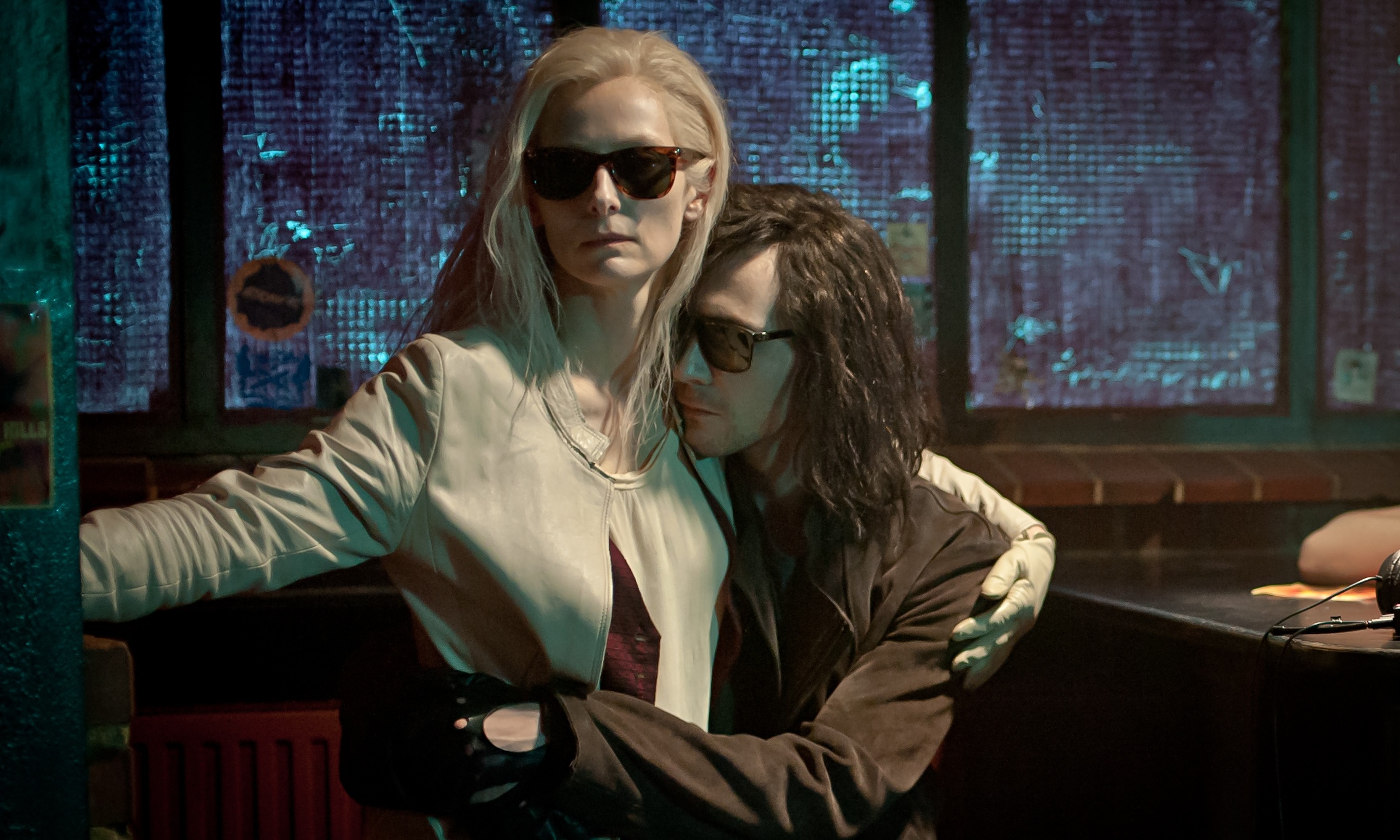
Only Lovers Left Alive (Jim Jarmusch, 2013)
7/10
I liked Jim Jarmusch's last movie, The Limits of Control, quite a bit when I saw it in theatres. I'm not sure if it would hold up on a repeat viewing, though, and Only Lovers Left Alive is the reason for my skepticism. In a lot of ways it's a very similar movie. Slow, stylish, and it's easy to feel like it's more of a showcase for Jarmusch's favorite music than anything else. But luckily Jarmusch's aesthetics line up with what appeals to me, so I enjoyed myself. Swinton and Hiddleston are fine, and the movie glides along with an effortless cool and sexiness. Any plotting involving Mia Wasikowska and John Hurt's characters feels pretty incidental, but they play their parts well too.
I very much enjoyed the urban decay portrayed in the movie in Tangier and in Detroit (but mostly Detroit) although I wish Jarmusch had done more to tie it in more with his characters, or emphasize the connections between the two.
Distant (Nuri Bilge Ceylan, 2002)
8/10
I've only seen one Nuri Bilge Ceylan movie, Once Upon a Time in Anatolia, which I enjoyed very much. This one is very good too, about a man who loses his job and stays with his wealthier relative. The focus of the film is on both men's aimlessness. Yusuf, put out of a job by the economic climate, has an aimlessness that's a little more "real" - he has no education, no skills and no money. Mahmut, his relative, has more money and some skills (he's a photographer) but is equally unmotivated - in the career he hates, with his ex-wife, and with his lover.
Their relationship comes to a "head" (as much as anything can come to a head in this movie) in a particularly brilliant sequence. Mahmut can't find a missing watch. Yusuf claims he hasn't seen it. Mahmut finds the watch, but doesn't tell Yusuf - in fact, he makes it apparent that he's gone through Yusuf's stuff "looking" for it. Mahmut is so emotionless he can't even bring himself to accuse Yusuf to his face of the theft he knows Yusuf didn't commit. So he dishevels Yusuf's bag hoping to draw him into a confrontation. Yusuf instead departs without saying a word to Mahmut, apparently unperturbed.
What the movie shows is two men more or less crushed to nothingness by factors both external and internal. It ends on an ambiguous note but there's no mistaking the sadness that runs through the whole movie and both its main characters.