Showing posts with label 2014. Show all posts

21 June 2016

Clouds of Sils Maria (Olivier Assayas, 2014)

7/10
I will confess that I am a sucker for self-referential plots in movies. What I mean is, Kristen Stewart and Juliette Binoche are rehearsing a movie script in the Swiss alps and the movie frequently and cleverly blurs the lines between the script and their relationship. Even if, admittedly, I'm a little unclear as to the ends it achieved in this movie, I was still dazzled in a couple of scenes. The actresses are both great, especially Stewart (maybe because we expect it more from Binoche and less from her) and Chloe Grace Moretz was very good too. I probably couldn't explain this movie to you very well, but as far as a movie about an actress coming to terms with her aging self and faced with the threat of a younger generation (not at all a new concept in cinema by any means) I found it quite interesting.

Foxcatcher (Bennett Miller, 2014)

6.5/10
I intentionally kept myself in the dark about the central story so I could go into the movie blind. It just took me longer than I expected to get around to watching the movie. At first I was very much impressed with the cinematography and direction, which are not usually meant to be eyecatching in a biopic like this. But as the movie started to sag in its second act, it felt more dull than artistic. The umpteenth time we're subjected to a misty shot of the estate with a plinky piano backing score, you start to wonder if these shots are standing in for the fact that the movie doesn't really have a whole lot to say in the end. It never attempts to delve into the psychology behind John du Pont or his motivations, and it generally keeps all of its characters at a frustrating remove. And by the end of the film I was left to wonder "is that all there is?" which I suppose is a natural byproduct of making a movie about a senseless event. Full marks to the three principal actors (even though I felt Steve Carrell's accent, as good as he was overall, was a little all over the place) and the film is certainly gorgeous to look at, I just wish there were more.

21 May 2015

Cake (Daniel Barnz, 2014)

6.5/10
I wasn't expecting too much from this, and about half an hour in I was sure I was going to hate it. Jennifer Aniston stars as Claire, a pain-riddled, grief-stricken, drug-addicted woman who initially appears to have no redeeming qualities whatsoever. Another woman in her chronic pain sufferers support group, Nina, commits suicide, and Claire is fascinated by the incident to the point of being visited by Nina in hallucinations. Claire eventually tracks down Nina's windower, and the fact that he's blindingly handsome and charming and accepts crazy Claire and all her problems without a hitch...well the movie starts to shape up as another one of those dreadful things where all of a woman's problems are magically solved once she finally meets A Good Man.
Mercifully (and unexpectedly) the movie doesn't really take that path. That's not to say it's totally cliche-free, because it has its share of them, and much of the staging for the incidents that occur feel more like hacky screenwriter gimmicks and less like things that would actually occur to real people. But in the last act or so the movie does finally turn out to be an emotionally honest and rather sad portrayal of grief. I've never cared for Jennifer Aniston in anything but she does a very good job in a role that easily could have been histrionic and over-acted. No classic, but ultimately better than I thought it would be.

16 May 2015

The Babadook (Jennifer Kent, 2014)

8/10
As far as horror movies go I found this did a really job of embracing certain conventions while subverting others (the mother/son relationship, to say no more for fear of spoilers). Like It Follows, it mostly disposes of cheap jump scares and ends up creeping its way under your skin, although I can understand some feeling let down that there's no major "payoff scare". The story is compelling and a pleasingly new twist on an age old monster movie story and the acting is exceptional, in particular Essie Davis as the mother. I liked the throwback-ness of the Babadook itself, it has a kind of charming lo-fi aesthetic that brought me back to the days when horror movies weren't all CGI and makeup. Overall it was smart, well-crafted, respectful of genre conventions but innovative as well, and delivered on the scares. Very little not to like.

A Girl Walks Home Alone at Night (Ana Lily Amirpour, 2014)

6.5/10
More or less exactly what you'd expect to be, despite its odd existence ("black and white Iranian-language Spaghetti Western vampire movie ala Jim Jarmusch"). The B&W photography is very nice and the movie is well directed, and it has a great soundtrack. It moves at a glacial pace, but it feels a bit like it's leaning heavily on the "slow = artistic" trend and not because it serves the film any particular purpose. In fact the more I watched the harder I found it to shake this niggling feeling that if it weren't for all its pre-packaged exotica and bells and whistles ("A slow-paced vampire movie? Shot in black and white? In Persian?!?"), A Girl Walks Home wouldn't be talked about nearly as much as it is. Once you strip away those call-them-gimmicks-if-you-will, there's a concerning lack of story and depth to the movie. It's pretty and kind of cool but not something I see myself returning to, although I'll remain curious to see what else writer/director Ana Lily Amirpour comes up with next. I'd give the soundtrack a few more listens if I could find it, though.

15 April 2015

It Follows (David Robert Mitchell, 2014)

8.5/10
It Follows has that rare thing in horror movies these days, a truly great, original premise. It also (mostly) leaves the cheap jump-scares which have become so prolific lately at the door and generates its scares from nightmarish, surreal scenes of dread and general creepynees. That combined with its incredible score give it an appealing "old school horror" feel (not unlike the score of the last movie I reviewed, You're Next, but even better). Writer/director David Robert Mitchell directs with a lot of visual flare, there are numerous great shots that are mostly atypical of what we've come to expect from the genre. It is well acted by its young ensemble, and in particular by its star, Maika Monroe.
That said, the nature of the film's own "monster movie logic" means that the scares and creep-factor are diminished the longer the movie goes on (once we're used to "it" walking toward its heroine at a calm pace and accept the fact that our heroine will continue to escape, the tension lessens...not to mention that because of the fact that "it" is only targeting and can only be seen by our heroine, we know can let our guard down when the camera isn't fixed on her). Compounding that, I think the movie noticeably falters in its final act. Mitchell has built a great premise and executes it very well, but doesn't seem to know where to take it. A last-act confrontation (the swimming pool scene) feels clumsy and doesn't appear to serve the story in any real way, although I did like the end of the film.
Unfortunately, the nature of the "evil" in the movie makes it completely open to being sequel-fodder, and it's hard to imagine further installments being as effective as this one was, especially if Mitchell is not at the helm.

06 April 2015

Neighbors (Nicholas Stoller, 2014)

3/10
It goes to rather ludicrous, unrealistic lengths to pit a whole fraternity against a young family (Seth Rogen, Rose Byrne and their 1ish year old) and once you accept this silly premise, it forgets to pepper the script with jokes. The movie mostly glides by inoffensively enough on the charm of its actors, who are all very good (can someone explain to me why I still like Dave Franco despite the fact that he always plays the same character?). But it revisits a central concern that was dealt with many years ago in Knocked Up - that whole Judd Apatow brand of, "partying and getting high all the time was awesome and now I feel constricted by this new familial role I'm expected to play!" shtick. And seeing the same actor, Rogen, doing it again made it feel especially tired.
I did enjoy Rose Byrne a lot and her character too, and I liked how they made a point of not making her out to be the nagging shrew chastising her oafish husband's harebrained schemes (with a pointed reference to every Kevin James movie ever). Her character very much gets her hands dirty and it feels like a breath of fresh air in an otherwise boring and generally uninteresting movie.

30 March 2015

Interstellar (Christopher Nolan, 2014)

8/10
I enjoyed this more than I expected to, based on the little I had read about it, and ultimately I found myself agreeing with both the general chorus of praises and criticisms it received. Like Inception, it's not a perfect movie by any means, but I certainly am impressed with Nolan's vision and his willingness to make grand, ambitious movies...even if they stumble along the way.
This blurb from John Beifuss (in a favorable review) says it best: "The sentimentality and Hollywoodized convenience of the storytelling prevent this mostly admirable film from achieving the escape velocities of Kubrick or Tarkovsky." That's exactly what I felt. Nolan, for whatever reason, just couldn't shake off those niggling Hollywood annoyances that weighed down his movie in ways that 2001 or Solaris (or even Gravity) were not. From casting McConaughey as the ultimate Hollywood hero (the Single Dad Doing His Best) to the worst offender of all, Matt Damon's awful performance as a horribly cliché character in a horrible cliché act that threatens to sink the entire movie. Thankfully it recovers, but these and other scenes left a bad taste in my mouth in a movie with otherwise great ideas, storytelling, special effects, music, acting, etc.
Okay, so Interstellar probably isn't as mind-melting and high-minded as it wants you to believe it is, but it's pure cinema and I mostly enjoyed myself. I feel like there's a rush to take down Nolan at every possible turn (just as much as there's a rush from the other side to prop him up at every turn) and I don't think as highly of him as a lot of others do but I'm still glad he's around and making movies like these, imperfect as they may be.

27 March 2015

A Million Ways to Die in the West (Seth MacFarlane, 2014)

2/10
I don't particularly love Seth MacFarlane and didn't much care for his first feature attempt, Ted, either. But in that movie and Family Guy and his other projects he's shown a rare ability to craft a hilarious line that catches you completely off-guard. Almost none of that wit is on display at any time here. Frankly I have a hard time figuring out what MacFarlane was trying to do with this movie. At times A Million Ways almost seems to be a real movie, what with how seriously it takes its central love triangle (MacFarlane, barely doing anything resembling acting, torn between two beautiful blondes, Charlize Theron and Amanda Seyfried). The problem is the love triangle isn't interesting, and there are oddly long stretches where the movie doesn't even try to be funny. There are pacing issues as well, and the movie feels sloppily cobbled together. Sarah Silverman and Giovanni Ribisi figure heavily into the opening 20ish minutes and then are practically gone from the movie until the very end. Liam Neeson brings some gruff charm as the villain but he's not in the movie very much either and can't come close to saving it.
But the biggest let down is the humor, or lack thereof. When it is there, it's just not funny - most of the jokes are feeble at best when MacFarlane usually, if nothing else, at least goes for shock value. That the two biggest laughs are supposed to come from Neil Patrick Harris taking a dump in a cowboy hat and a close-up of MacFarlane's face getting urinated on by a sheep are proof of just how badly the mark is missed. These are sub-Farrelly brothers moves, getting dangerously close to Tom Green territory. MacFarlane is capable of much better and the cast he assembled here probably deserved better too.

26 March 2015

22 Jump Street (Phil Lord & Christopher Miller, 2014)

7/10
I don't think I ever reviewed 21 Jump Street here but I like it a lot, probably one of my favorite comedies of the last few years. It had the right amount of self-awareness about its silly premise, surprisingly good chemistry between Jonah Hill and Channing Tatum, and it was consistently funny.
The 2nd one has some good jokes but overall is a bit of a step down. It really overloads the self-awareness factor, constantly poking fun of its own existence as a sequel, but sometimes it's a bit too much - like yeah, we get it. Hill and Tatum are still good together but the movie reintroduces the same conflict from the first one, only flipped: now Tatum is the popular one and Hill is the one feeling brushed aside. It was funnier when they subverted expectations by doing the reverse in the first one, now the conflict feels forced and the scenario (Tatum becoming the football stud, Hill becoming the art school geek) is not nearly as clever.
Also the feeling of sequel-itis and the need to do everything bigger and better this time creeps in and the movie rushes through a lot of plotting (the central investigation, Tatum's rise as a football stud and his bromance with the quarterback, Hill dating the police chief's daughter, a last act spring break trip to Mexico). The movie boasts almost the exact same running time as its predecessor but somehow feels longer and weightier.
But all that said, anyone who liked 21 will probably not find anything to hate here. There's some good laughs but I just don't think I'll return to it as often as I've rewatched 21. The end credits gag reel where they go through a dozen scenarios for future Jump Street installments is a must-see, though.

23 March 2015

The Purge: Anarchy (James DeMonaco, 2014)

4.5/10
I had heard the sequel righted a lot of wrongs of the first one. It takes a multi-character approach: instead of focusing on just one family's "Purge night", it focuses on three different groups - a mom and her daughter locked down for the night, a couple stuck out in the streets when the Purge starts, and a mysterious-looking badass who appears to be out to do some Purging of his own. This is a good start but the way these three strands all collide through various, increasingly implausible circumstances, not to mention the presence of some kind of anti-Purge night/counter-terrorist group thrown in the mix, falls even more flat in the end. The movie mostly ditches its horror film roots in favor of brassy action sequences, as the five end up outside together during the Purge and have to band together to survive. There's all manner of boring tropes to be found in their group, from the mouthy teenager to the badass with a heart of gold, and I was mostly bored myself throughout. There's an interesting (if, again, very silly) premise behind the Purge movies and it's not hard to feel like these two stabs haven't quite hit the mark yet. But the idea certainly lends itself to a lot of various scenarios (like the Saw franchise) so I won't be surprise if there's a few more tries at it before the brand is put to rest for good. Maybe one of those will get it right.

18 March 2015

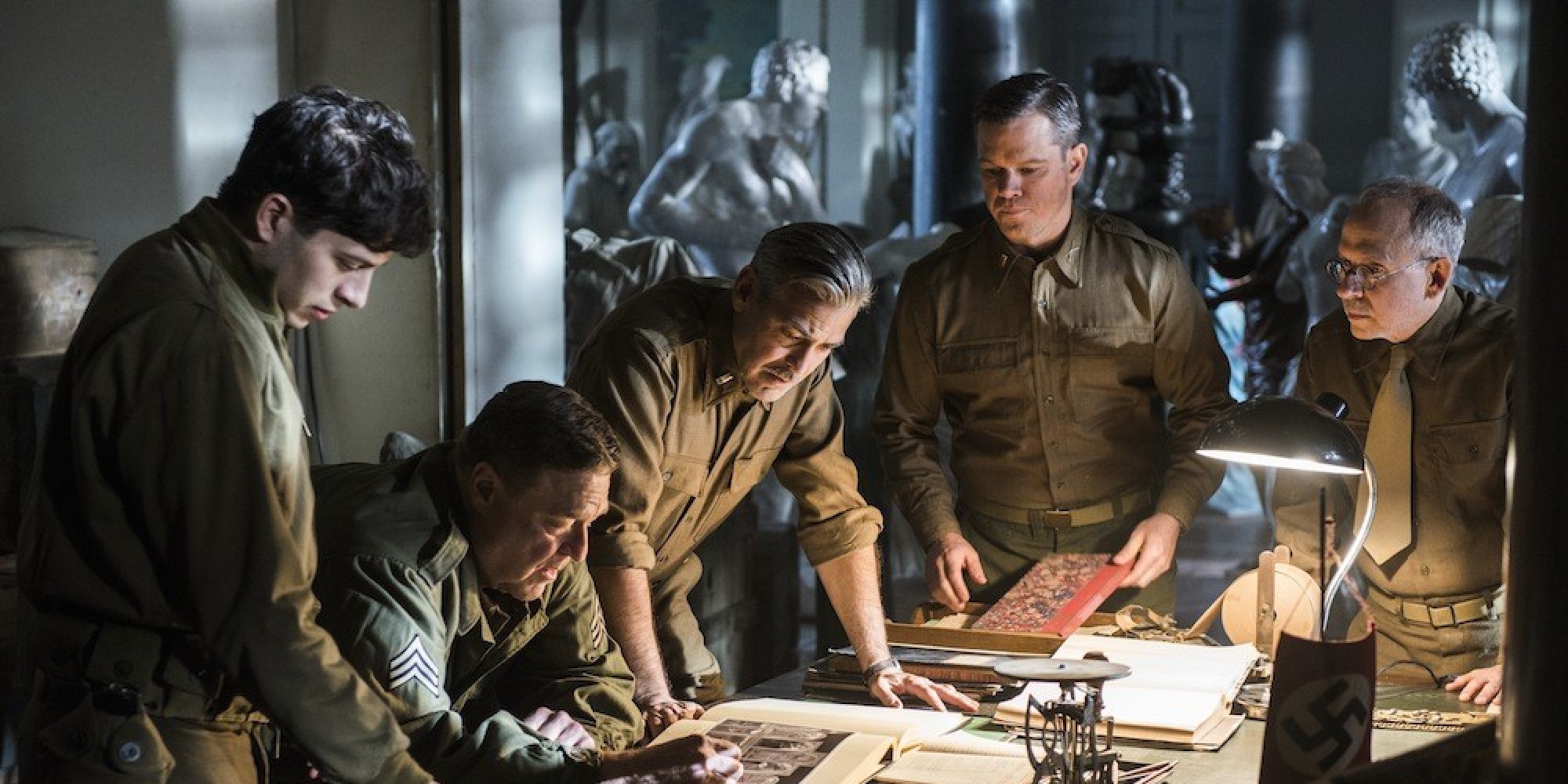
The Monuments Men (George Clooney, 2014)

4/10
This is a strange, uncertain movie, done in by the fact that it can't decide if it wants to be a comedy or if it wants to be a drama. The end result is that it's not particularly funny and it's not particularly dramatic. George Clooney casts himself and a bunch of buddies who can do comedy (Matt Damon, Bill Murray, John Goodman, Jean DuJardin, Bob Balaban) so you might think you're getting a WW2-set Ocean's Eleven, but frankly the comedic moments here are so light they make Ocean's Eleven seem downright edgy.
But this is a WW2 movie after all and there has to be some sad parts (spoilers: not everyone in the ensemble makes it to the end) but the characters are sketched so shallow that nothing really registers. And while the real Monuments Men mission was undoubtedly important, the movie is a complete failure at creating any real tension, which makes the whole expedition feel mostly like a lark.
The tonal shifts make the whole movie feel messy and uneven. Murray and Balaban, for instance, are paired off and have a nice, grumpy old men kind of comedic chemistry...meanwhile Cate Blanchett plays her character like she was told she's in Schindler's List II, wringing melodrama out of just about every word.
There's an interesting story in here, and it probably deserved better than this movie, which is not inept enough to be hateable but it doesn't offer much to like about it either. Mostly it just glides by.

16 March 2015

Winter Sleep (Nuri Bilge Ceylan, 2014)

9.5/10
Winter Sleep is a movie about a man, Aydin, who lives in and runs a hotel in the mountains of Turkey, in addition to renting out residential properties in the region to other tenants. The movie is largely a character study of Aydin, and it is a fascinating one. At first he appears aloof at best and negligent at worst, in his dealings with his live-in sister and his much younger wife and especially his tenants. It's not so much that the movie eventually exposes giant character flaws in Aydin either - it's just that it so convincingly picks at the little flaws in his character that he is completely oblivious to and which are actively causing destruction in his relationship with both his sister and his wife. However, even Aydin's wife, despite growing to hate and fear him, must consent that he is by and large a hard-working, honest and intelligent man. Aydin's flaws are more flaws of the soul, if I can attempt to be poetic for a second, and they are unveiled slowly throughout the movie's gargantuan running time (3h19m), particularly in two or three separate and equally enthralling arguments with his wife and sister (who are, to be sure, flawed in their own ways as well, and the script doesn't let them off the hook either).
The study of Aydin reminded me a lot of writer/director Nuri Bilge Ceylan's previous movie Uzak (Distant), in that it too dealt with characters who weren't overtly flawed in the way we typically think of movie characters as flawed, but who had altogether more subtle yet no less damaging and very real flaws all the same. The characters, like Aydin, float between spinelessness and altruism, with no real awareness of the former or conviction to the latter. As an example, Aydin donates money to a charity not because he wants to but because he should - but it's not even that he doesn't want to either. Similarly, his repeated defense throughout the movie is a variation of "I'm not forcing you to stay" (to his wife) or "I didn't force you to come" (to his sister) and nothing speaks louder about the type of person Aydin is. He's right that he's not the problem on one level, but he's the entire problem on a completely different level. I can't explain it myself, so just watch the movie.
The movie's final act is interesting and ultimately depressing. We are shown that despite his conflicts with his wife and sister (not to mention his minor conflicts all around him with his tenants and other people from the area), Aydin has not learned and will never learn, getting drunk, getting self-righteous in his right-but-wrong way towards a local teacher, and throwing up on himself, in that order. At the same time his wife's attempt to make amends with a tenant that feels wronged by Aydin goes horribly wrong. The impact of this scene is a little tougher to pin down but to me it showed Aydin's wife experience something of the external factors that contributed to making Aydin into the man he has become. Aydin's wife is altogether more naive and innocent and this harsh brush with an ugly reality (and her subsequent tearful-bordering-on-traumatized reaction) suggests that not only has she now been face-to-face with the kind of thing that could give rise to apathy in a person (like her husband), but that she is aware that her own soul has been poisoned too. Which is, of course, one of the most powerful things about Winter Sleep: the recognition of ourselves in Aydin and the uneasy feeling that we are like him too, maybe in more ways than we'd want to admit.
The movie was, characteristically of Ceylan, beautifully shot in a mindblowingly gorgeous location. Most movies this long are usually filled with slow, static shots. Winter Sleep has a few, but it is an incredibly dialogue-heavy movie. Unlike, say, Albert Serra's Story of My Death (another slow director turned chatty) where the dialogue made me want to drown myself, Winter Sleep's crackles. It's absolutely rich and engrossing and makes the movie's lengthy running time feel like nothing at all. And I have to give special mention to Haluk Bilginer who played the role of Aydin, and gave an incredibly naturalistic and impressive performance. No grandstanding, no huge show of emotions, just an incredibly real performance in which a raised eyebrow or a bemused smirk still said so much.

12 March 2015

Goodbye to Language (Jean-Luc Godard, 2014)

4/10
My great shame is that I didn't see this in 3D, which is seemingly a sin on par with watching Avatar or Gravity on one's smartphone. I saw it in the officially-released 2D Blu-Ray version, so that still counts for something? I would like to see it in 3D, not because I enjoyed the movie but because apparently there's some pretty impressive and rule-breaking 3D shots that I think would be very interesting to see "for real". The way the movie is shot (by cinematographer Fabrice Aragno) is by far its strength as there's a real hypercolor beauty to a lot of the shots. Goodbye to Language is if nothing else a really strong and convincing argument for how beautiful digital filmmaking can be.
As for the movie itself, well, to me it's an arthouse Avatar. Avatar was beautiful but packaged with a dumb plot that a 5 year old could understand. Goodbye to Language is beautiful and packaged with a dumb plot that nobody on earth could possibly understand. Where Avatar quotes anyone-can-get-it fare like Dances with Wolves and Pocahontas, Goodbye to Language is its polar opposite, jammed with no-one-can-get-it references to Flaubert, Dostoyevsky, Rilke, Solzhenitsyn, Ellul and too many others. And if you stripped away the technical marvels of Avatar you were left with little of interest; the same, I think, applies to Goodbye to Language. Or at least it did for me. And maybe Godard wanted it that way too. But his movie still bored me to tears. Even after watching it in part or in whole three consecutive times (it's only 69 minutes long) and reading as much as I could about it, and deconstructing and piecing back together its twin narratives and double actors and obscure references, the value of the movie was almost entirely lost on me and I have my suspicions that it would have been lost on a whole lot of other people too if it didn't have the uncriticizable name of Jean-Luc Godard attached to it.
Nonetheless I do remain impressed that Godard has not gone quietly into his twilight years - this is a movie as provocative and impenetrable as anything released by any younger filmmakers out there, and it still could not have been made by any other filmmaker but Godard. Not many directors in their 80's have ever continued to try to push boundaries as aggressively as Godard has without dipping into self-parody at any point, and I have plenty of respect for that.

10 March 2015

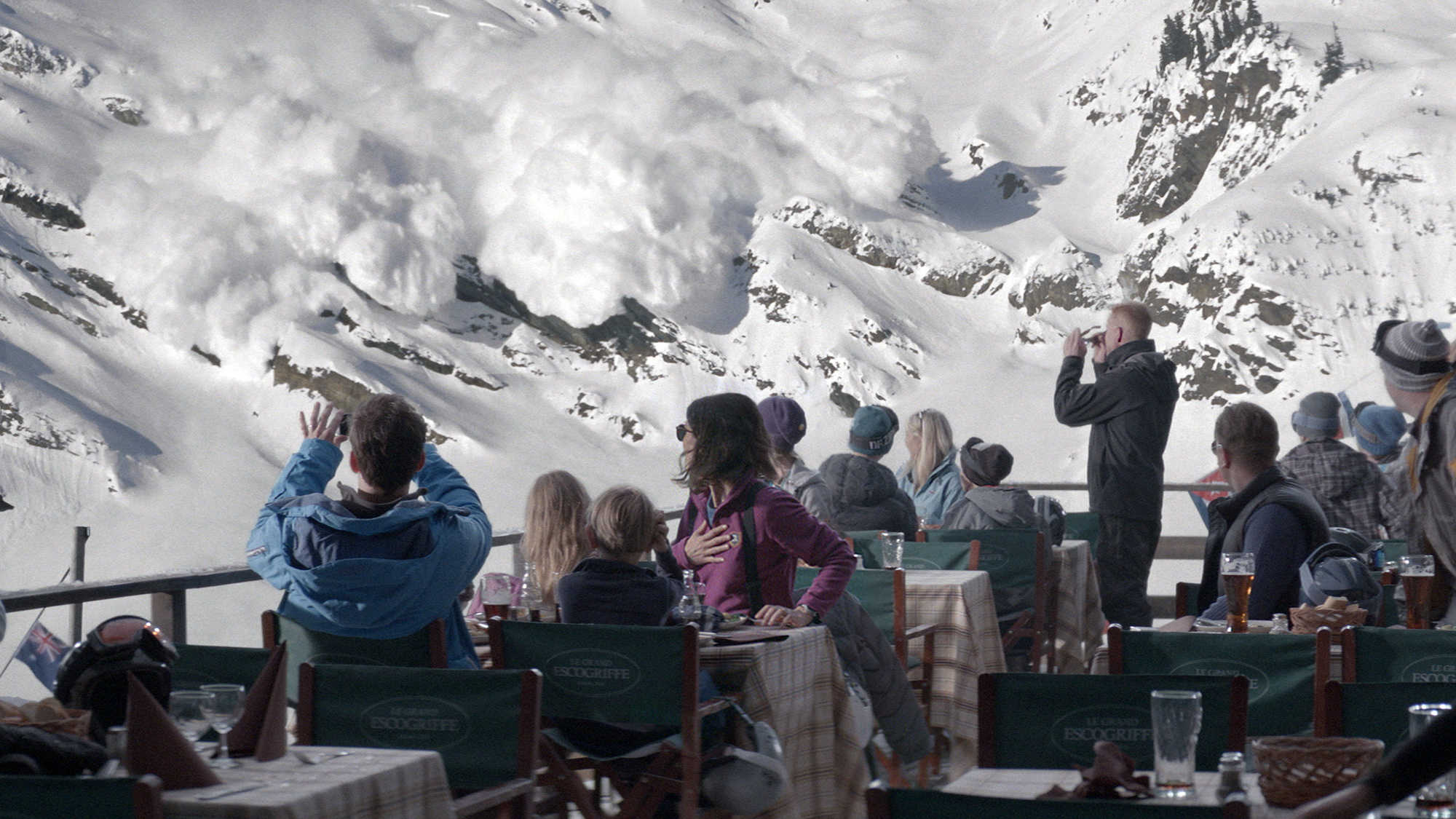
Force Majeure (Ruben Ostlund, 2014)

8/10
What a great title for this movie. Force majeure is legally defined as a "chance occurrence, unavoidable accident" (Wiki). Perhaps more relevant to the film, force majeure "[does] not excuse a party's non-performance entirely, but only suspends it for the duration of the force majeure" (Wiki again).
A near-miss avalanche that sees husband and father Tomas running for cover leaving his wife and 2 young children behind is the central concern of the film. For Tomas, the episode is little more than a story to tell at dinner; for his wife, it's a minor annoyance that slowly grows into a major impasse (a metaphorical avalanche so to speak): her perception of Tomas is permanently altered. The way this event is treated among the movie's characters was one of my favorite aspects of the movie. It's almost like an horror movie epidemic (underlined by the score's Hitchcockian string stabs), slowly infecting almost everyone who comes into contact with it: Tomas, his wife, their kids, their friends, and, more indirectly, an entire busload of people. Eventually Tomas is forced to confront his own actions, both to himself and to his children, pathetically staging a perilous situation on the ski hills where he can "rescue" their mother in front of them, an attempt to restore some kind of balance to their now-skewed family unit.
The movie makes for an interesting commentary on the fragility of not only our relationships but ourselves as people and who we are, or who we think we are. I found it very interesting to learn afterward that writer/director Ruben Ostlund came up with the movie after reading about a dramatically high rate of divorce among couples who survive major catastrophes.
The movie is beautifully shot, both in its ski resort interiors and mountain exteriors. I found it suffered from a similar "problem" as Ostlund's 2011 film Play - it presents a really interesting dilemma and asks some difficult questions that don't have easy answers, but ultimately there are niggling feelings of...incompleteness? Both movies were like reading a thought-provoking op-ed piece. I appreciate the questions they asked but I might have hoped for a little more closure and, once the questions are out there, it's hard to see much value in returning to the essay or film again. As much as I liked Force Majeure, I don't see a whole ton of value in repeated viewings, which maybe knocks its score down a notch for me.

02 March 2015

Maps to the Stars (David Cronenberg, 2014)

4.5/10
I'm still waiting for a David Cronenberg movie I really love as even his best efforts (The Fly, Videodrome) I've found overrated. He's a .200 director for me. Maps to the Stars probably isn't "best Cronenberg" by any metric. It's very reminiscent of his last, Cosmopolis, as it too feels angry and restless and makes some rather banal stabs and commentary about whatever Cronenberg was seemingly annoyed by on the day of shooting. But it's just as content to look pretty and it always does, given the gorgeous Hollywood interiors most of the movie is shot in.
The actors are the main draw here, especially Julianne Moore who is fantastic. Mia Wasikowska is fine too and I don't know who Evan Bird is but he was great as a snotty, punchable-faced spoiler child star.
As for the movie itself, it felt like David Lynch (speaking of) already critiqued everything said here with way more artistry and way more weirdness in Mulholland Dr. and Inland Empire. Maps wants you to believe it's weird and arty but it's not, really, and the ending proves that. Kind of like Cosmopolis, which started out weird and arty and ended totally boring. Mostly Maps is just kind of unpleasant, certainly not something worth revisiting any time soon.

24 February 2015

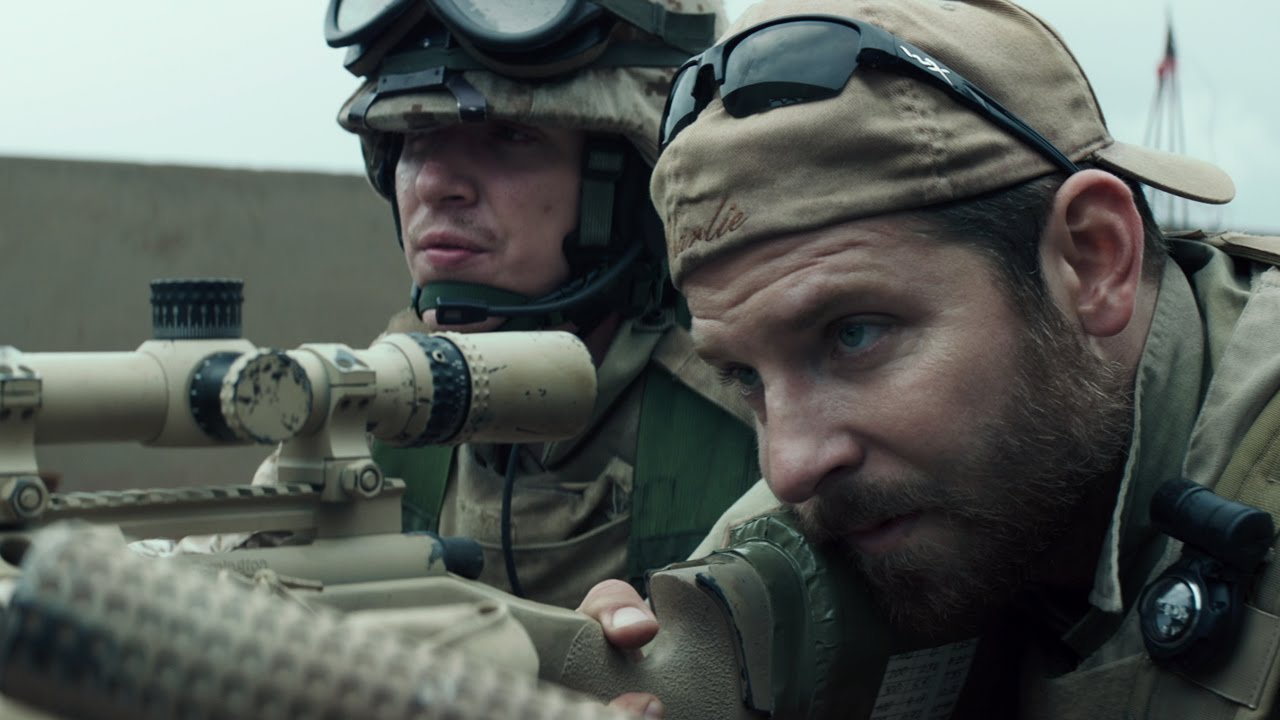
American Sniper (Clint Eastwood, 2014)

7/10
It was entertaining enough if unspectacular for the first 75% of the film, but I felt like things kind of fell apart with the remaining 25%. Notwithstanding Kyle's actual account of the events, I thought the movie wrapped up his fourth tour way too neatly - casting Mustafa as a recurring villain gave the story a weird, almost "video game" type feel. Like Kyle had to beat the "final boss" before feeling like he had accomplished what he had to and could finally head home.
The ending was also problematic. Since the case still isn't closed on Kyle's death, there was only so much the movie could do or say in depicting it and it had a weirdly rushed, anticlimactic feel. Couldn't we have waited a couple more years to see how the trial shakes out before committing his life to film? In any case, it was not hard to be moved by the tragic poignancy of a guy who lived his life to protect others only to be murdered by one of his own...on U.S. soil no less.
I'm gobsmacked that people have criticized the movie for glorifying war or blamed it for dehumanizing Iraqis or anything like that...I don't know how dumb you have to be to interpret this as a "pro-war" movie, come on. I was actually expecting the movie to be a lot more chest-thumpingly pro-America (based on what I'd heard) than it turned out to be.
In any case, the action was mostly very good, and Bradley Cooper was very good himself, but in comparing this to other recent war movies, it's a lot closer to The Hurt Locker (i.e. meh, not bad) than Zero Dark Thirty (i.e. great) for me.

20 February 2015

Selma (Ava DuVernay, 2014)

7/10
Following The Theory of Everything and The Imitation Game in the "true stories told well" category this year is Selma, which was everything I thought it would be and little more and I could probably copy and paste my review from the Imitation Game in here and there wouldn't be much change. I liked Selma a little bit more as it was still more emotionally engaging than IT and its lead performance was much, much better but it's still not a movie that's particularly memorable or notable for any one reason. So I'll say what feels like something I've said a lot about the Best Picture finalists this year: well told, well acted, well scripted, well shot...nothing much else to say.

19 February 2015

The Theory of Everything (James Marsh, 2014)

8/10
I really liked this. Comparing it to other Best Picture nominees, it is not tier 1 (Boyhood) or tier 2 (Budapest) but fits snugly with Whiplash and Birdman in tier 3 as movies that were not life-alteringly brilliant but ones that I can definitely say I enjoyed on most levels. On the face of it its closest comparable is The Imitation Game but I found TToE had a lot of warmth and heart that Imitation Game lacked.
I will say one thing with respect to Tkachuk4MVP's review a couple of posts ago - this is definitely a movie that knows it has a tremendous amount of ground to cover and at times it's easy to become conscious of that as a viewer. Often, especially at the beginning, it feels like it's racing along, cramming in necessary scenes and info, but not really taking as much time as it should to dwell on them (gotta stay inside that Academy friendly 2 hour running time!).
But on the other hand, I liked how it took the focus off of Hawking's genius (mostly). We all know he's a genius, we don't need the movie to go to the necessary lengths to tell us that again. And frankly I assume what would be needed to establish just why Hawking is a genius would go over a lot of the audience's heads, myself included. So I give the movie credit for dodging that battle and instead mostly focusing on a (not so) simple love story that does plenty of credit to the subject himself while remaining engaging, interesting, and heartfelt. Not to mention beautifully shot, extremely well acted, and featuring a really good score. Plainly put if you take it for what it is, it makes virtually no missteps. No pun intended.
I also thought Eddie Redmayne was exceptional and deserving of every accolade he should get for his performance including (if I had my way) the Oscar.

17 February 2015

Whiplash (Damien Chazelle, 2014)

8/10
Whiplash isn't a particularly brilliant movie - for the first hour plus it's actually pretty by-the-numbers. It's not that it turns into a brilliant movie after that point either, just that it finally gets to where you knew it was going and it still turns out to have been totally worth the wait. It's also helped along by two great performances by Miles Teller and J.K. Simmons. Simmons' performance doesn't exactly have a lot of depth but for a supporting role it's hard to ask for much else. In fact Simmons' character Fletcher teeters so often on the brink of being cartoony that he deserves a lot of credit for keeping him monstrous instead.
(Some spoiler talk below)
I read some conversation (here and elsewhere) condemning the movie for appearing to condone bullying. I'm not totally sure I agree. I think some viewers were left disappointed that we never really got to see Fletcher's real comeuppance despite him being a jerk for 100% of the film's running time, but just because we're denied seeing that doesn't mean the movie condones what Fletcher does. I mean, if the movie had shown Fletcher and Andrew having a laugh and sharing an iced tea after the final performance I might agree, but the movie smartly ends onstage, leaving any inference of right or wrong up to the viewer alone. So I don't think the movie was condoning or condemning, just portraying, which is OK too.