23 March 2015

The Greatest Movie Ever Sold (Morgan Spurlock, 2011)

5/10
Morgan Spurlock, best known as the Super Size Me guy, takes on product placement in movies and television by financing this entire documentary through sponsorships, product placements, brand integrations, and so on. Well, he doesn't really "take on" product placement so much as he's forced to embrace it in order to make his movie. And his movie is, in fact, the making of that same movie. Confused? It's not confusing when you watch it but it's difficult to explain. It's a self-referential exercise, whereby the scenes of Spurlock selling his film form the meat of what we watch here, the finished product. It's clever, and the first time you watch an in-movie advertisement featuring Spurlock pushing one of the products he was paid to push, it sort of clicks in a weird, Exit Through the Gift Shop type of way, where we begin to question everything we're seeing.
By the second and third time though, it feels significantly less clever - after all, watching ads, even of the "wink wink nudge nudge, we're all in on the joke" variety found in Spurlock's film, is still watching ads. And when you get to the end of the movie's lean 88-minute runtime, you realize that Spurlock hasn't said anything interesting or new about product placement in movies. It's almost as if he's afraid actually discussing the subject itself would turn off moviegoers, so he sticks to jaunty montages and scenes of him glad-handing bemused marketing execs. Spurlock has a natural charisma that makes watching him always engaging but I would have found a lot more value if the movie had taken an extra half-hour to actually talk about product placement, its history, its effect on viewers, and so on. Spurlock is definitely on the Michael Moore spectrum of "infotainment" documentary filmmaking but this one errs way too far on the side of "entertainment" than "information" and could have done with a lot more of the latter. Spurlock eventually raised the $1.5 million he needed to make his movie and then used it to say decidedly little after all.

The Purge (James DeMonaco, 2013)

6.5/10
This was better than expected, although not a classic by any means. Maybe if I had seen more from this recent spate of home invasion horrors I would have been more bored by this one than I was. It takes a pretty ridiculous (although thought-provoking enough) premise and hones it in on one family, which I understand a lot of people didn't like. I enjoyed the "moral dilemma" of the film and admittedly had fun imagining such a scenario in real life. Although it has to be stated that for this film to work the way it unfolds, a lot of people have to do a lot really stupid or really illogical or really uncharacteristic things, so it's definitely a bit of a groaner at times. But as far as entertainment goes, it was passable.

Frozen (Chris Buck & Jennifer Lee, 2013)

7/10
I get the hype, it was a good movie. I can see why it was so endearing to everyone, particularly kids. In fact I thought it was aimed a lot more at kids than some of the bigger animated movies in recent years (not that I'm an aficionado). Toy Story 3 for example definitely seems to try to appeal to both kids and adults. Frozen was going purely for kids and hit the target dead-on. Anyway I didn't love it or anything but it was fun.

18 March 2015

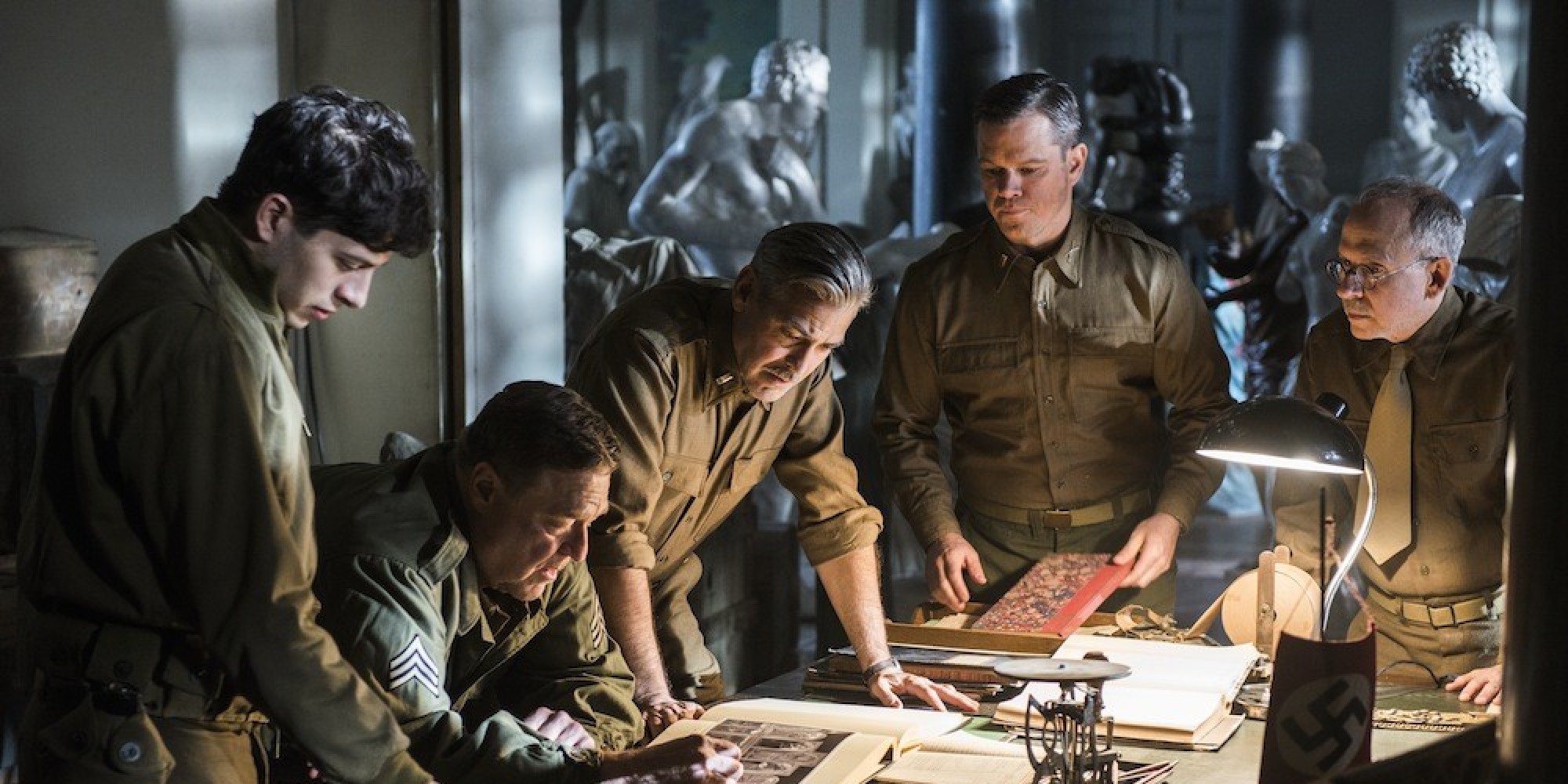
The Monuments Men (George Clooney, 2014)

4/10
This is a strange, uncertain movie, done in by the fact that it can't decide if it wants to be a comedy or if it wants to be a drama. The end result is that it's not particularly funny and it's not particularly dramatic. George Clooney casts himself and a bunch of buddies who can do comedy (Matt Damon, Bill Murray, John Goodman, Jean DuJardin, Bob Balaban) so you might think you're getting a WW2-set Ocean's Eleven, but frankly the comedic moments here are so light they make Ocean's Eleven seem downright edgy.
But this is a WW2 movie after all and there has to be some sad parts (spoilers: not everyone in the ensemble makes it to the end) but the characters are sketched so shallow that nothing really registers. And while the real Monuments Men mission was undoubtedly important, the movie is a complete failure at creating any real tension, which makes the whole expedition feel mostly like a lark.
The tonal shifts make the whole movie feel messy and uneven. Murray and Balaban, for instance, are paired off and have a nice, grumpy old men kind of comedic chemistry...meanwhile Cate Blanchett plays her character like she was told she's in Schindler's List II, wringing melodrama out of just about every word.
There's an interesting story in here, and it probably deserved better than this movie, which is not inept enough to be hateable but it doesn't offer much to like about it either. Mostly it just glides by.

17 March 2015

Arachnophobia (Frank Marshall, 1990)

7.5/10
I only half-remembered this from my childhood so I decided to watch it when it was on TV the other day. It's actually still pretty good. The "spider invasion", implausible as it may seem, is well done. Keeping the spiders out of most of the movie (except for the single ones here or there that do the killing) is classic monster movie staging, saving the huge swarms of little ones and the queen for the very end, and it works very well. Jeff Daniels' war in the cellar with the big mother spider is more than a little silly but I guess a big confrontation was needed. I was surprised at how effective the movie still is - anyone who is even remotely not fond of spiders will probably feel their skin crawl a few times. I wasn't sure how I felt about John Goodman's kind of jokey exterminator character - overall I liked him but could have done without some of the cornier scenes he was in. Not a horror classic or anything but a well-made and creepy enough movie.

16 March 2015

Winter Sleep (Nuri Bilge Ceylan, 2014)

9.5/10
Winter Sleep is a movie about a man, Aydin, who lives in and runs a hotel in the mountains of Turkey, in addition to renting out residential properties in the region to other tenants. The movie is largely a character study of Aydin, and it is a fascinating one. At first he appears aloof at best and negligent at worst, in his dealings with his live-in sister and his much younger wife and especially his tenants. It's not so much that the movie eventually exposes giant character flaws in Aydin either - it's just that it so convincingly picks at the little flaws in his character that he is completely oblivious to and which are actively causing destruction in his relationship with both his sister and his wife. However, even Aydin's wife, despite growing to hate and fear him, must consent that he is by and large a hard-working, honest and intelligent man. Aydin's flaws are more flaws of the soul, if I can attempt to be poetic for a second, and they are unveiled slowly throughout the movie's gargantuan running time (3h19m), particularly in two or three separate and equally enthralling arguments with his wife and sister (who are, to be sure, flawed in their own ways as well, and the script doesn't let them off the hook either).
The study of Aydin reminded me a lot of writer/director Nuri Bilge Ceylan's previous movie Uzak (Distant), in that it too dealt with characters who weren't overtly flawed in the way we typically think of movie characters as flawed, but who had altogether more subtle yet no less damaging and very real flaws all the same. The characters, like Aydin, float between spinelessness and altruism, with no real awareness of the former or conviction to the latter. As an example, Aydin donates money to a charity not because he wants to but because he should - but it's not even that he doesn't want to either. Similarly, his repeated defense throughout the movie is a variation of "I'm not forcing you to stay" (to his wife) or "I didn't force you to come" (to his sister) and nothing speaks louder about the type of person Aydin is. He's right that he's not the problem on one level, but he's the entire problem on a completely different level. I can't explain it myself, so just watch the movie.
The movie's final act is interesting and ultimately depressing. We are shown that despite his conflicts with his wife and sister (not to mention his minor conflicts all around him with his tenants and other people from the area), Aydin has not learned and will never learn, getting drunk, getting self-righteous in his right-but-wrong way towards a local teacher, and throwing up on himself, in that order. At the same time his wife's attempt to make amends with a tenant that feels wronged by Aydin goes horribly wrong. The impact of this scene is a little tougher to pin down but to me it showed Aydin's wife experience something of the external factors that contributed to making Aydin into the man he has become. Aydin's wife is altogether more naive and innocent and this harsh brush with an ugly reality (and her subsequent tearful-bordering-on-traumatized reaction) suggests that not only has she now been face-to-face with the kind of thing that could give rise to apathy in a person (like her husband), but that she is aware that her own soul has been poisoned too. Which is, of course, one of the most powerful things about Winter Sleep: the recognition of ourselves in Aydin and the uneasy feeling that we are like him too, maybe in more ways than we'd want to admit.
The movie was, characteristically of Ceylan, beautifully shot in a mindblowingly gorgeous location. Most movies this long are usually filled with slow, static shots. Winter Sleep has a few, but it is an incredibly dialogue-heavy movie. Unlike, say, Albert Serra's Story of My Death (another slow director turned chatty) where the dialogue made me want to drown myself, Winter Sleep's crackles. It's absolutely rich and engrossing and makes the movie's lengthy running time feel like nothing at all. And I have to give special mention to Haluk Bilginer who played the role of Aydin, and gave an incredibly naturalistic and impressive performance. No grandstanding, no huge show of emotions, just an incredibly real performance in which a raised eyebrow or a bemused smirk still said so much.

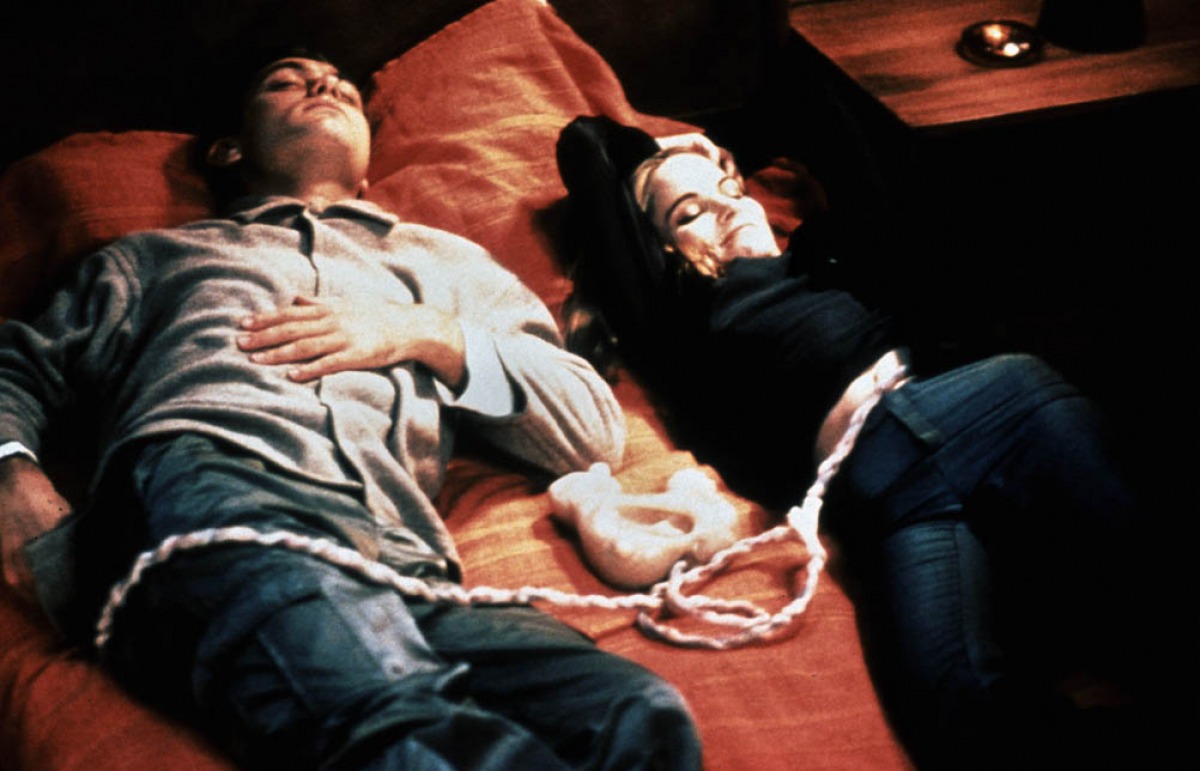
eXistenZ (David Cronenberg, 1999)

5/10
eXistenZ has a mildly interesting concept, moreso if you set your mind back to those times in the late 90's when the movie came out when virtual reality and computers as reality and The Matrix and Y2K were the pressing concerns of the times. Viewed in 2015, eXistenZ is kind of hokey, and its "Cronenberg prosthetics" (is there a name yet for those unconvincing plasticky looking body part facsimiles he insists on using in just about all his movies?) don't help make it look any more authentic. For most of the movie I didn't care about its protagonists and the story itself is kind of muddy. As the audience, we're never really given any reason why we should care about Allegra or her game or why it needs to be preserved, especially once we go "into it" with the protagonists.
There's a pretty cool double-twist ending that I'm kind of amazed/annoyed I didn't see coming, although maybe if I had been trying to unravel the movie a little more instead of mostly just waiting for it to end, I might have (then again maybe not).